

Upgrading Your Outdoor Heating for Cold Winter Nights
Cold winter evenings can make even a well-designed patio feel underused, especially after sunset brings a sharp drop in temperature. Thoughtful heating choices can extend outdoor gatherings while also shaping how seating, pathways, and fire-safe zones are arranged. Outdoor fireplace designs offer more than warmth because their placement, scale, and construction can influence the entire character of an exterior living area. SUNJOY, for example, provides models suited to different backyard layouts, giving homeowners another reference point when evaluating how a dedicated fire feature might fit into a winter entertaining plan.
Understanding Winter Heat Distribution
Warmth from an outdoor fire does not spread evenly across an open yard. Radiant heat travels outward from the source, while wind can carry warm air away before guests feel much benefit. Seating distance therefore matters, particularly during cold weather when people naturally want to remain close to the heat.
Sheltered locations can make outdoor gatherings more comfortable, but enclosed structures introduce additional considerations. Walls, roofs, screens, and nearby materials may affect airflow and smoke movement. Manufacturer-specified clearances should always guide placement, especially around combustible surfaces.
Furniture arrangement can make a noticeable difference as well. Chairs positioned in an open arc allow several people to share the warmth without creating a crowded center. Clear walking paths should remain between seating, entrances, dining areas, and the fire feature.
Selecting A Suitable Fire Feature
Fuel type deserves careful consideration before choosing winter heating equipment. Wood-burning units create visible flames and a traditional fire experience, while other heating technologies may offer different operating characteristics. Local regulations can also affect which systems are permitted in a particular residential area.
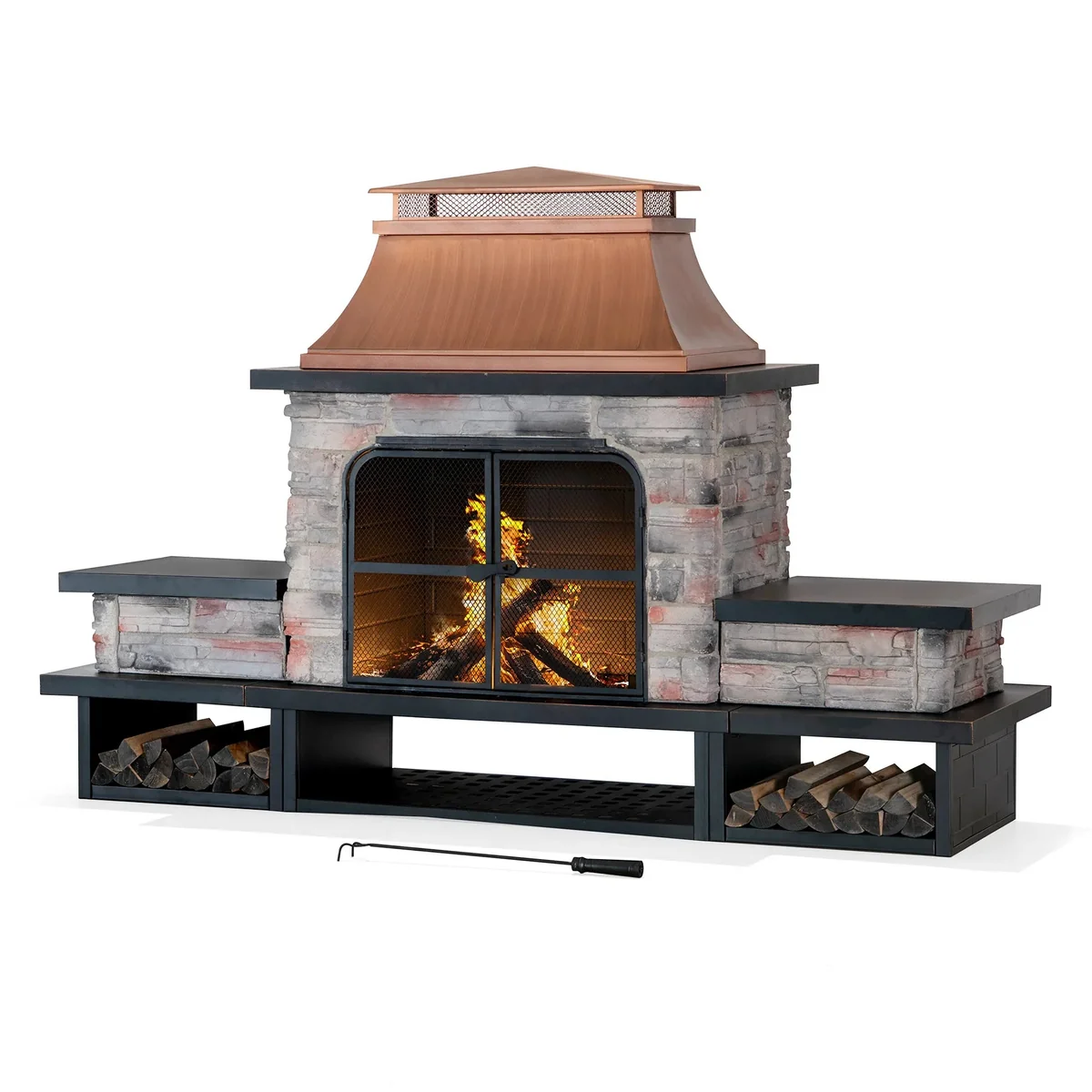
The Canyon Stone Wood Burning Fireplace with Log Holders 82″ – Antique Copper provides one example of a substantial outdoor fire feature. Its two locking steel mesh doors provide a clear view of the flames while helping contain flying sparks and embers; the doors can also be opened when the fire requires attention. Such details illustrate why construction features should be considered alongside dimensions and appearance.
Weather exposure presents another factor. Winter moisture, freezing temperatures, wind, and repeated heating cycles can place stress on outdoor equipment. Protective measures, regular inspections, and appropriate storage practices can help preserve surfaces and functional components over time.
Improving Fire Safety Around The Patio
Safe operation begins with the area surrounding the fire rather than the flames themselves. Combustible cushions, blankets, decorations, dry vegetation, and stored firewood should remain outside the clearances specified for the equipment.
Spark control becomes especially relevant with wood-burning systems. Burning embers can travel farther during gusty conditions, while dry leaves or other lightweight materials may ignite if they accumulate nearby. Regularly clearing the surrounding ground helps keep the fire zone orderly.
For an outdoor fireplace, ash handling requires patience as well. Residual embers may remain hot after visible flames have disappeared, so ashes should be treated as potentially hot until the fire has fully cooled. Suitable non-combustible containers should be used according to local guidance and manufacturer instructions.
Making Outdoor Heating More Efficient
Cold-weather comfort depends on more than increasing heat output. Windbreaks, covered seating zones, and sensible furniture placement can reduce the amount of warmth lost to moving air. Landscaping may also contribute to shelter, although plants and branches must remain at safe distances from flames and hot surfaces.
Layered comfort works particularly well for winter gatherings. Warm clothing, insulated seating cushions, and weather-resistant blankets can reduce reliance on the fire alone. Such additions also allow guests to adjust their comfort individually rather than moving the entire seating arrangement.
Lighting deserves consideration after dark. Path lights can make steps and walkways easier to navigate, while softer illumination around the seating area preserves the visual prominence of the flames. Excessive decorative lighting may reduce the atmosphere created by the fire.
Planning For Long-Term Outdoor Use
Regular inspection becomes increasingly valuable when heating equipment is exposed to changing seasons. Visible corrosion, damaged screens, loose hardware, cracks, or unusual wear should be assessed before another period of frequent use. Manufacturer maintenance instructions provide the appropriate reference for specific components.
Firewood quality also affects the experience. Properly seasoned wood generally burns more predictably than damp fuel, which can produce additional smoke and residue. Storage should keep firewood reasonably dry while maintaining a safe separation from the active fire.
Broader weather patterns may influence how often an outdoor fire feature can be used. Heavy rain, strong winds, freezing conditions, or local fire restrictions may make operation unsuitable on certain days. Flexible expectations allow the outdoor space to remain useful without treating heating equipment as something that must operate regardless of conditions.
Conclusion
Winter comfort comes from combining suitable equipment with sensible spatial planning, safe operating habits, and realistic expectations about outdoor conditions. Outdoor heating works most effectively when wind exposure, seating distance, fuel characteristics, and surrounding materials are considered together rather than separately. Fire features can then become part of a broader seasonal design instead of functioning as isolated sources of warmth.
Thoughtful placement also gives an outdoor fireplace a practical role within the landscape, helping define conversation areas without obstructing movement or competing with dining spaces. Features such as locking mesh doors, integrated storage, and durable construction can add useful functionality, but routine care remains essential regardless of the chosen model. For homeowners comparing winter-ready options, SUNJOY provides examples that can be evaluated according to space, usage patterns, and maintenance expectations.