

High-frequency solar pump inverter innovations via top solar inverter companies
In product listings, the word high-frequency can describe very different things: the switching rate of the power transistors, the output frequency range of the drive, or simply a marketing label.
For anyone comparing a high-frequency solar pump inverter from one solar inverter company with another, the useful question is what the term changes in operation. The real advances in solar pump drives lie partly in switching technology and partly in control, power sources and data, and each of them can be checked against concrete specifications.
Carrier Frequency Versus Output Frequency
The inverter bridge of a pump drive builds an AC waveform for the motor by switching its transistors on and off thousands of times per second, a technique called pulse-width modulation.
The switching rate, known as the carrier frequency, is typically set in the kilohertz range and is distinct from the output frequency that sets motor speed. When a design is described as high-frequency, the carrier is usually what is meant. The carrier is normally adjustable, so installers can lower it where heat is the bigger concern and raise it where noise is.
A higher carrier makes the motor current smoother, which reduces audible noise and current ripple. A quieter motor is a practical benefit for a solar water pump controller installed near homes or livestock sheds, and smoother current also reduces the additional heating that ripple causes in the motor windings.
The Physics of the Trade-Off
Faster switching comes at a price. Each transition dissipates energy in the transistors, so switching losses rise roughly in proportion to carrier frequency, and the extra heat must be removed or the drive’s current rating reduced.
Steeper voltage edges also stress cable and motor insulation, especially on long cable runs where reflected waves can raise the peak voltage at the motor terminals. Long cables carry capacitive leakage currents that grow with switching frequency, which can disturb earth-leakage protection.
Device technology decides where the balance lies. Newer power semiconductors switch with lower losses, letting designers raise the carrier without overheating, while output reactors or filters protect long cables from voltage spikes.
Calling a drive a high-frequency solar pump inverter therefore describes a choice about how losses, noise and filtering are balanced, and two products carrying the same label can strike that balance differently.
Innovation Beyond the Switching Stage
Firmware has moved pump drives forward at least as much as switching hardware. Support for several motor types lets one drive serve existing induction pumps as well as more efficient permanent-magnet or brushless DC pumps.
Those motors need a drive that can estimate rotor position, so motor support is a firmware capability as much as a hardware one. Hybrid input allows the same unit to run from the array by day and from the grid when sunlight is insufficient, without separate starters or changeover panels.
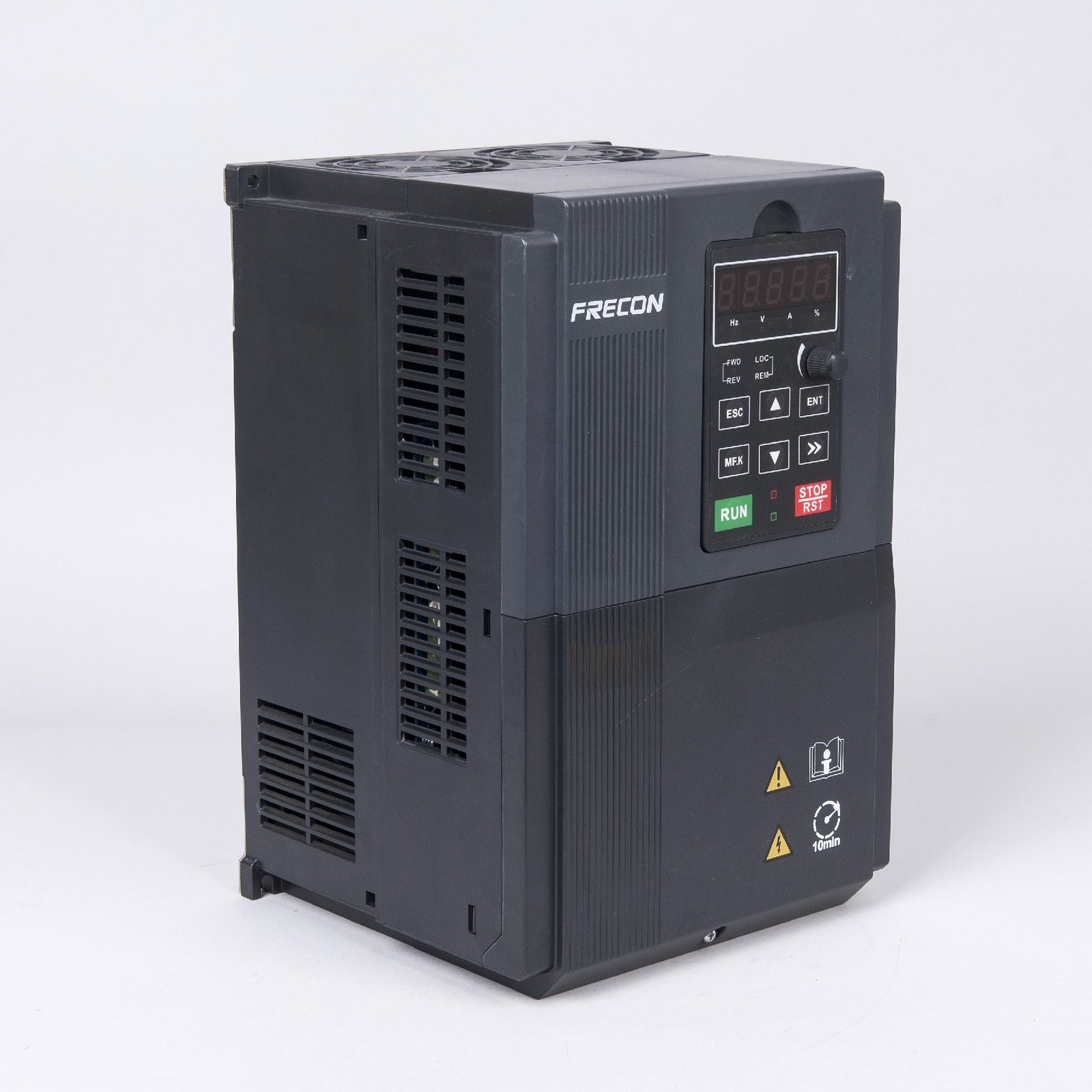
Three motor families, asynchronous, permanent-magnet synchronous and brushless DC, are covered by FRECON‘s PV500, which also switches automatically between solar DC and AC-grid power and tracks the array’s maximum power point with an efficiency of up to 99%.
When a solar inverter company folds these functions into one solar water pump controller, the number of devices on site falls, and with it the number of connections that can fail.
Data and Remote Visibility
Connectivity has changed how remote pumps are managed. A controller that reports its status lets an operator see whether a pump stopped because of low sunlight, a full tank or a fault, without travelling to the site.
Stored records turn individual readings into trends, so falling water volume at constant energy can point to a worn pump or a dropping water table. Alarms sent to a phone shorten the time between a fault and its repair, which counts most in dry seasons when every pumping day is needed.
Optional 4G or WiFi modules give FRECON’s PV500 this kind of visibility through an app and a web interface, including remote operation, while the drive keeps its own record of accumulated energy, water flow and operating hours.
A multifunction LCD keypad shows four parameters at once, includes parameter definitions and supports parameter backup and upload/download, so proven settings can be carried from one solar water pump controller to the next.
Scaling Up and Judging What Is New
Power range is the last area in which pump drives have moved forward. FRECON offers the PV500 in DC 310V models from 0.75 to 75 kW and DC 540V models from 0.75 to 560 kW, and versions with 900V DC input can be customised, covering applications from household and village water supply to agricultural irrigation and industrial water transfer. Long-cable installations can add an output reactor, which keeps steep voltage edges from stressing the cable and the motor.
Innovation in this field is best judged by what changes at the pump: more water per kilowatt-hour, fewer site visits and fewer failures. Quieter running or a higher carrier may be interesting in a demonstration, yet water volume and uptime are the figures that show whether a change pays.
Litres lifted and days without a callout decide whether a high-frequency solar pump inverter improves on earlier designs, whichever solar inverter company builds it, and a quieter motor comes second.